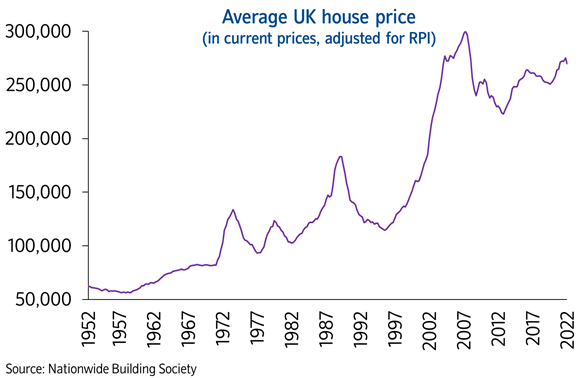
Yeah most people who bought houses 25+ years ago don’t appreciate that it’s exponentially more difficult these days. I don’t blame them, it’s not their fault, but a lot of people say ‘it was just as hard to buy a house in our day’ which I’m afraid is factually BS. It’s so far off it’s almost laughable.
The Bank of England has an inflation calculator that shows how ridiculous it’s become.
My parents bought a house in 1989 for £75k. As per the above calculator, that’s £199,000 in today’s money.
Their house was valued at £425-450k, so it would cost double to buy today, even if they were able to get lending at that amount.
My parents may not have had Starbucks and McDonald’s but they had beer, concerts and the cinema. Plenty of things to spend your hard-earned on in those days too.
The reality is, wage growth has been non-existent for so long now that even squirrelling away every penny is not enough to get most people anywhere near buying a house. Meanwhile those who already own are sitting on enormous capital, and in some cases multiple homes.
I’m fairly capitalist and right of the centre when it comes to economic politics so I don’t believe in taking away from the wealthy, many of whom have worked their backsides off but, wages need to increase, drastically across all industries. We can’t keep giving things away for free or offering subsidies, it hurts more than it helps in the long run. People are quick to demonise the 1% but neglect to remember that they foot the bill for almost 30% of the public purse. The top 10% fund well over half of it. Meanwhile, nearly half of the country contribute no income tax at all. None. Yet we’re increasingly expecting everything to be free, cheap or subsidised. It simply cannot work like that forever.
We also need to get people back to work by giving them something (and better wages) to aspire to.